Choosing a unit
Which EV charger should I buy?
They all charge at 7kW. Solar, tariffs and the cable are what actually separate them, and that makes the decision much simpler than the spec sheets suggest.
Get a price
Where does it need to go? Two taps and a postcode gets you a price.
The thing nobody tells you
How fast does a home EV charger charge?
A 7kW charger adds about 25 miles of range an hour. A 22kW charger, on a house, adds exactly the same, because 22kW needs three phases coming into the property and almost no British home has them. Even where three-phase exists, the car has its own onboard charger and most cap at 7.4kW or 11kW.
So the honest position is this. Every unit below charges your car overnight and they finish at the same time. Pick on the four questions underneath instead.
Four questions
How to choose an EV charger: four questions
Tethered or socketed?
Tethered means the lead is permanently attached, so you plug in one-handed and there is nothing to fetch from the boot. Socketed means you bring your own cable, which keeps the unit smaller and copes if you change to a car with a different connector. Most people who park the same way every day prefer tethered.
Do you have solar panels?
If you do, solar diversion is the one feature that changes the economics. A unit like Zappi or Hypervolt will only draw what the panels are exporting, so the car charges on generation you were otherwise selling back cheaply.
Are you on a smart EV tariff?
If you are, tariff integration matters more than anything else on the spec sheet. Ohme and Hypervolt schedule into the cheap window automatically. Without that you are setting timers by hand and losing the saving whenever you forget.
How many cars, now and later?
Two vehicles on one supply need load balancing, or the pair of them will trip the main fuse. Easee is built around this. Several other units manage it too, but it has to be designed in at the start. Discovering it afterwards means a second visit.
The units
Zappi, Ohme, Hypervolt and Easee compared
The two people ask about most are the Zappi and the Ohme, and they are built for two different houses. Zappi vs Ohme puts them side by side.
Zappi
Made by myenergi
Zappi diverts surplus solar into the car instead of exporting it. Its eco modes throttle the charge to match whatever the panels are producing, so the car soaks up generation the house is not using.
Suits: Houses with solar panels, where matching charging to generation is the whole point
Full Zappi guide and installation costOhme Home Pro
Made by Ohme
Ohme units talk directly to time-of-use electricity tariffs and schedule charging into the cheapest half-hours automatically. The car is charged by morning without you setting a timer.
Suits: Anyone on a smart EV tariff who wants the charging cost handled for them
Full Ohme Home Pro guide and installation costHypervolt Home 3
Made by Hypervolt
Hypervolt combines solar matching and tariff scheduling in one unit, with an app that reports per-session cost. The lighting ring is configurable, which sounds trivial and turns out to matter on a front elevation.
Suits: Households that want both solar and tariff control without picking one
Full Hypervolt Home 3 guide and installation costEasee One
Made by Easee
Easee units are small and designed to sit in a group. Several share one supply and balance load between themselves, which is why they turn up on driveways with two cars and in small commercial bays.
Suits: Two-vehicle households, and small sites adding several bays to one supply
Full Easee One guide and installation costWallbox Pulsar Plus
Made by Wallbox
The Pulsar Plus is among the physically smallest 7kW units, which helps where the only sensible position is a narrow porch return or a tight garage wall.
Suits: Constrained positions where a larger unit will not sit properly
Full Wallbox Pulsar Plus guide and installation costAndersen A2
Made by Andersen EV
The A2 hides the cable inside the housing and takes interchangeable fascias. It costs more than the engineering requires, and on a period frontage that is often the point.
Suits: Properties where the unit must not look like a piece of equipment
Full Andersen A2 guide and installation costTesla Wall Connector
Made by Tesla
The Wall Connector uses a standard Type 2 connector, so it charges any modern EV and not only a Tesla. It is the cheapest route to a solid 7kW unit, and it does the least beyond charging.
Suits: People who want a reliable charger and no app ecosystem
Full Tesla Wall Connector guide and installation costPod Point Solo 3
Made by Pod Point
Solo 3 is one of the most widely installed units in the country, which makes parts and familiarity easy. It is a straightforward charger with scheduling and no solar diversion.
Suits: Households wanting something common, supported and uncomplicated
Full Pod Point Solo 3 guide and installation costSupplied or your own
Any of these can be supplied as part of the job, or you buy the unit and pay for installation only. Say which at enquiry stage, because it changes what gets quoted.
Warranty and approvals
Units are fitted to the manufacturer's instructions so the warranty stands. Where a brand runs an approved-installer scheme, we confirm your installer holds it for that unit before booking.
What it will cost
Unit prices are published by the makers. The installation is priced after the survey, on your cable run and your consumer unit.
Work out your running costsBrand names describe the units. Unit prices are typical UK market figures; installed figures are guide prices for a local, VAT-registered installer, checked 27 August 2026. Neither is a quotation. No manufacturer approval, partnership or endorsement is claimed.
The technical bit
What every unit here has in common
These are regulatory and physical constants, so they are not points of difference between brands.
These figures are fixed by regulation and physics, not by who installs the charger. Manufacturer approvals vary by installer and are confirmed in writing before you accept anything.
Next
Booking your EV charger installation
Whichever you pick, the installation is the same shape: a dedicated circuit, a cable route agreed with you, a load check, then testing and certification. What changes the price is the run from your consumer unit to the parking.
Domestic installation covers how that works, and grants covers whether anyone else is paying for part of it.
On the wall
What the decision actually looks like
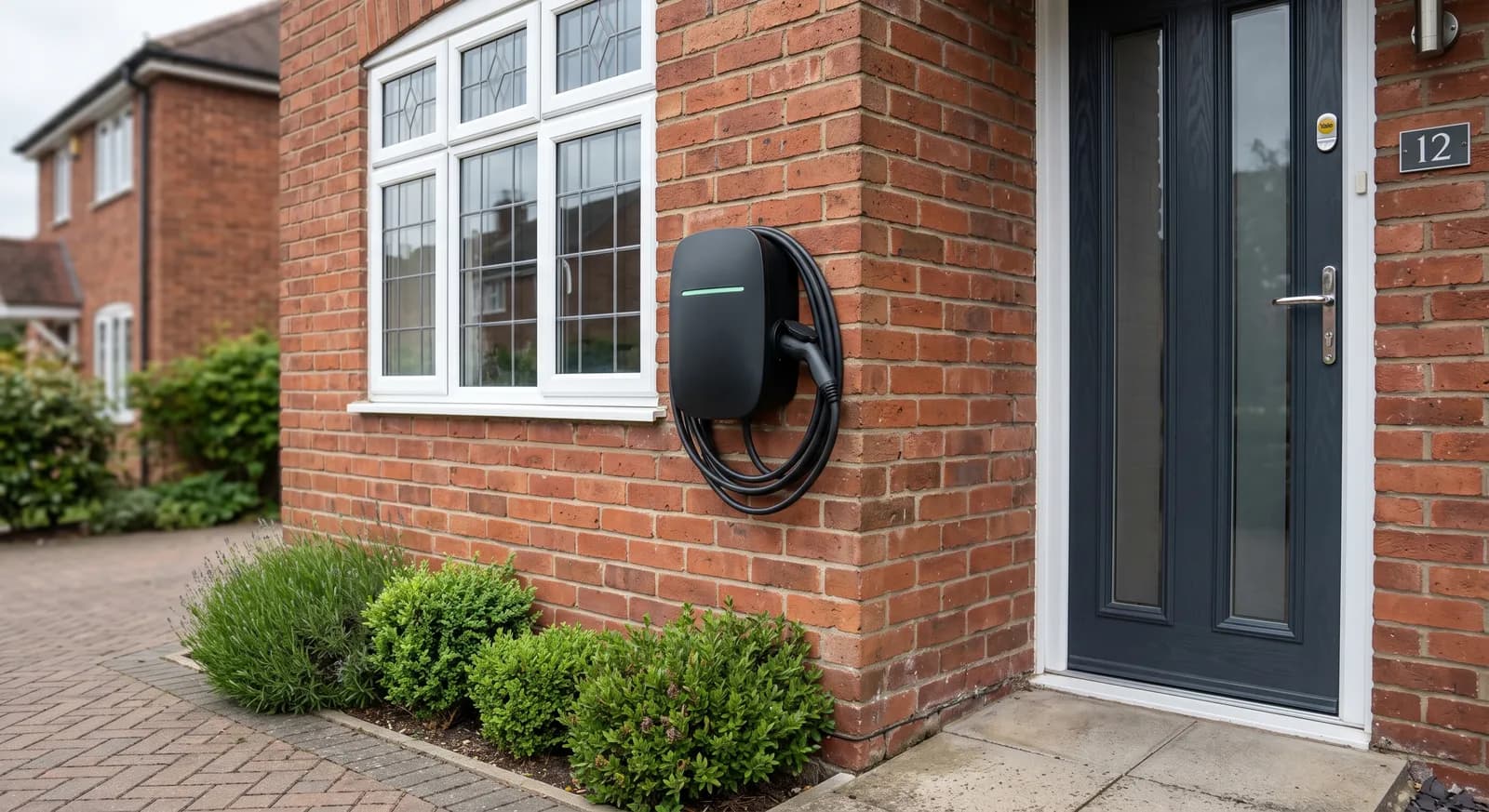
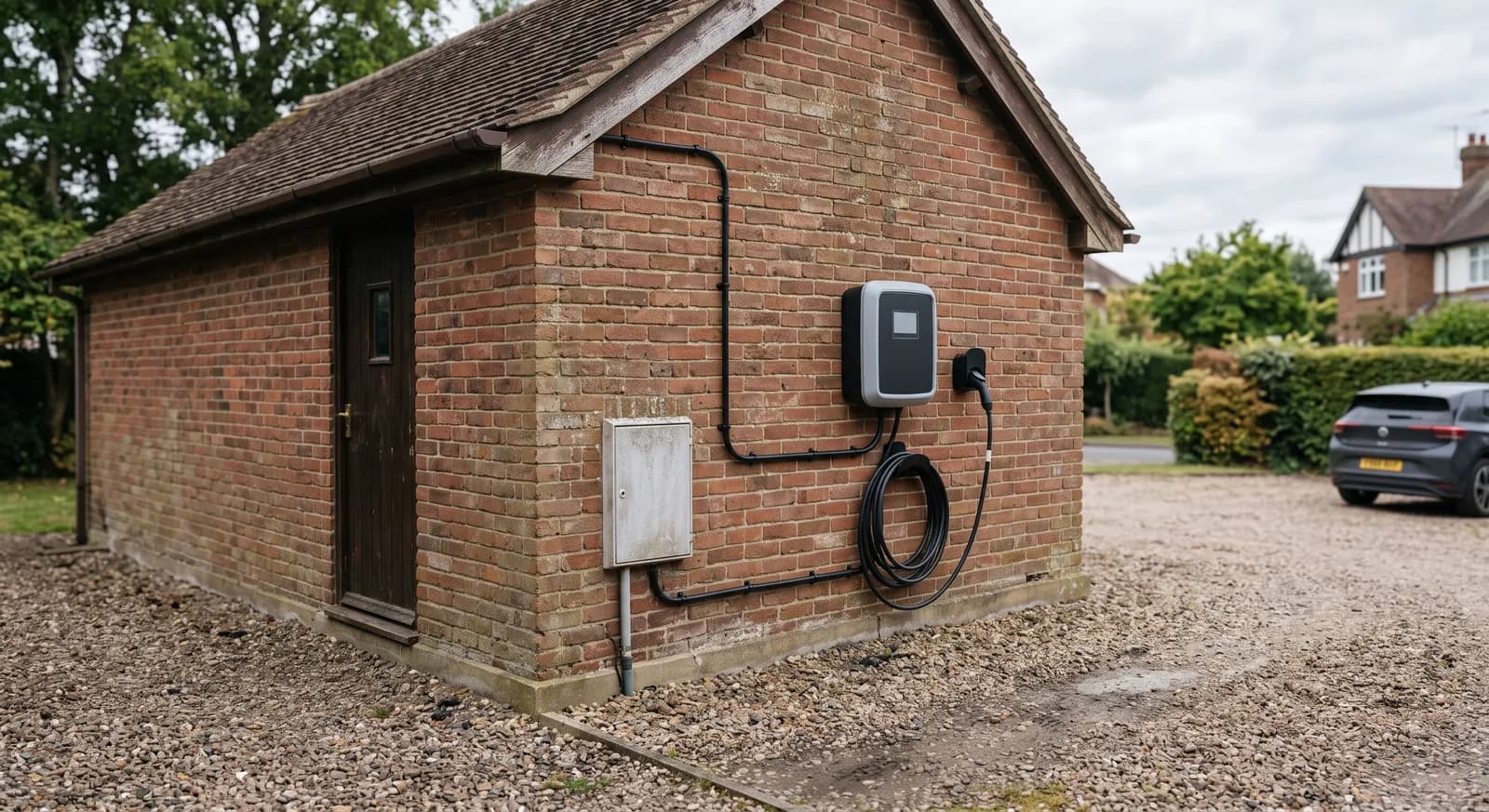
They all charge at 7kW. Where the unit goes, whether the lead is attached and how it looks on the elevation are the things you live with afterwards.
Next step
Tell us which unit you are considering and we will price it.
Send the postcode and the unit. If it is the wrong choice for your property we will say so before you buy it.
Questions
Questions about choosing a charger
Which EV charger is best for a UK home?
There is no single best unit, because on a single-phase supply they all charge at 7kW. Choose on what you have: solar panels point to a Zappi or a Hypervolt, a smart tariff points to an Ohme, two cars point to load-balancing units like Easee, and a tight wall points to a Wallbox Pulsar Plus.
Is a 22kW charger better than a 7kW one?
Not at home. 22kW needs a three-phase supply, which almost no British house has, and it also needs a car whose onboard charger can accept it, which most cannot. On a normal domestic supply a 22kW unit charges at exactly the same speed as a 7kW one.
How fast does a 7kW charger charge a car?
A 7kW charger adds roughly 25 miles of range an hour, so a typical 60kWh battery goes from nearly flat to full overnight. That is the figure that matters, because the car is parked for eight hours anyway.
Should I get a tethered or untethered charger?
Tethered has the lead attached, so you plug in one-handed with nothing to fetch. Untethered takes your own cable, keeps the unit smaller and copes if you change to a car with a different connector. People who park the same way every day usually prefer tethered.
Do I need a smart charger?
Yes. Regulations require new home chargepoints sold in Great Britain to have smart functionality, so every unit on this page has it. What varies is how well that functionality works with your tariff.
Will a home charger work with solar panels?
Some will. Zappi and Hypervolt can match the charge rate to whatever your panels are exporting, so the car uses generation you would otherwise sell back cheaply. Units without solar diversion simply draw at full rate whenever they are switched on.
Can I charge two cars from one charge point?
Not at once from a single socket. Two units on one supply need load balancing so they share the available capacity, which Easee is built around and several others support. It has to be designed in from the start.
Does a Tesla Wall Connector work with other cars?
Yes. It uses the standard Type 2 connector that every modern EV sold in the UK takes, so it charges a Kia or a Volkswagen exactly as happily as a Tesla.
Get a quote
Get an EV charger quote
Seven quick questions. We reply with either a fixed price or the one thing we still need to know.
- No cost, and no obligation to book anything
- Your details are never sold on or passed around
- A fixed price for the work described, in writing
Would rather talk it through? Call 01246 952042.