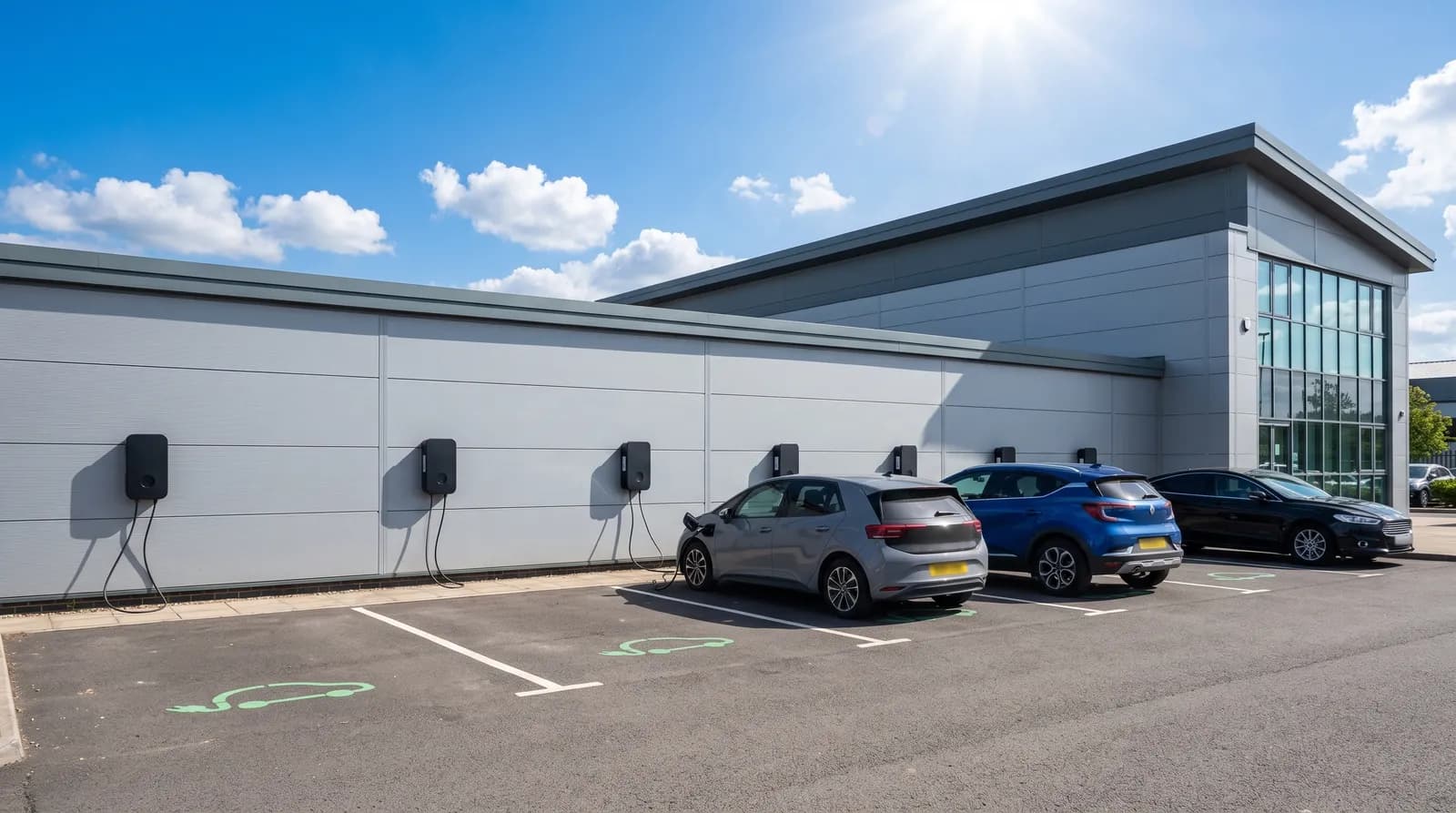
Charging at work
Commercial EV charge point installation.
Workplace charging stations, customer parking, visitor charging and van depots. We start with a load assessment and design the bay count around what the supply will carry.
Load assessment first. Scheme registration and insurance evidence comes with the quote.
Where is the property?
The postcode tells us your area and your network operator.
What is in the job
What commercial EV charging installation covers
Load assessment
What your incoming supply carries, what the site already draws at peak, and therefore how many bays are possible without an upgrade. Measured, not estimated.
Bay layout and civils
Where the units go, how the cable gets there, and what the parking needs. Trenching, ducting, bollards and line marking where the layout calls for it.
Load management
Capacity shared dynamically across the bays, so several vehicles charge at once without the site hitting a new peak. Usually the difference between four bays and none.
Access control and billing
Set up where you want it: RFID or app access, usage reporting per user or department, and charging staff, visitors or the public if that is the model.
Fleet and depot charging
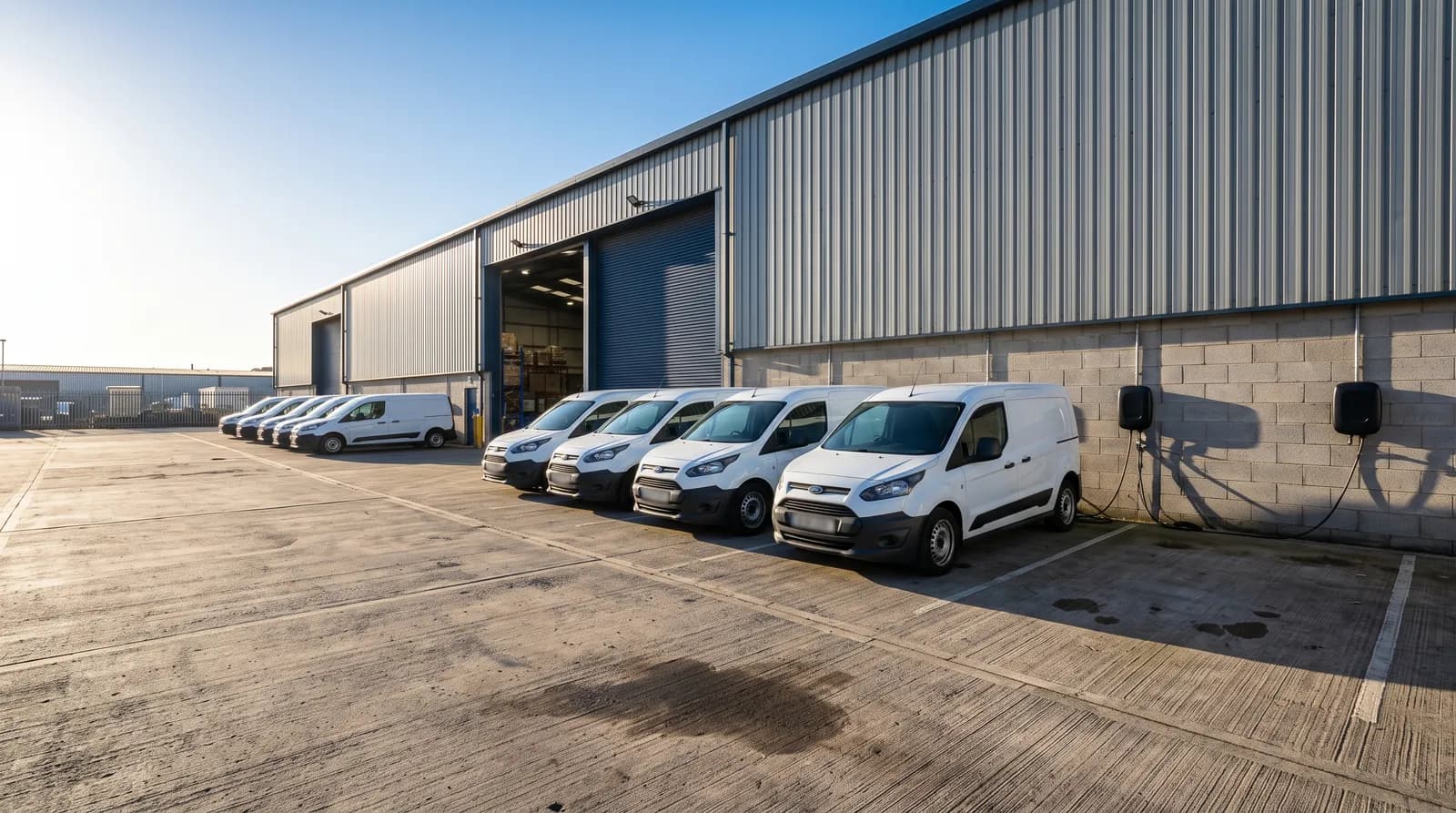
Vans and pool vehicles are a scheduling problem before an electrical one. What matters is the hours each vehicle sits still, not how fast a bay charges, so we design around the shift pattern and spread the load into off-peak hours.
Phased rollout as a fleet converts
Groundworks and containment sized for the fleet you will have, with the first phase of bays live now. The disruptive part gets done once.
How a commercial job goes
How commercial EV charging installation works
The order matters. Sizing the bays before assessing the supply is how sites end up with a quote that doubles when the network operator gets involved.
Site survey and load assessment
Incoming supply, distribution, existing peak demand and the parking layout. We establish the real ceiling before anyone talks about how many bays you want.
Design and network operator
Bay count, unit rating and the load management strategy. Where the site needs more capacity, the application to the network operator is handled as part of the job.
Installation and civils
Containment, trenching and ducting where the run needs it, units mounted or on pedestals, protection fitted where vehicles manoeuvre.
Commission, certify and hand over
Circuits tested and recorded, back-office and access control configured, and whoever manages the site shown how it works.
The technical bit
What decides commercial EV charging costs
Nearly every commercial quote turns on the first two rows. Get those right and the rest is design.
Physical and regulatory figures, not quotes. What applies to your property is confirmed in writing before you accept anything.
The work
Staff, customers and vans want different things
Every commercial scheme starts with the same load assessment, but what you are solving for decides the bay count, the hardware and whether access control is needed at all.
Areas covered
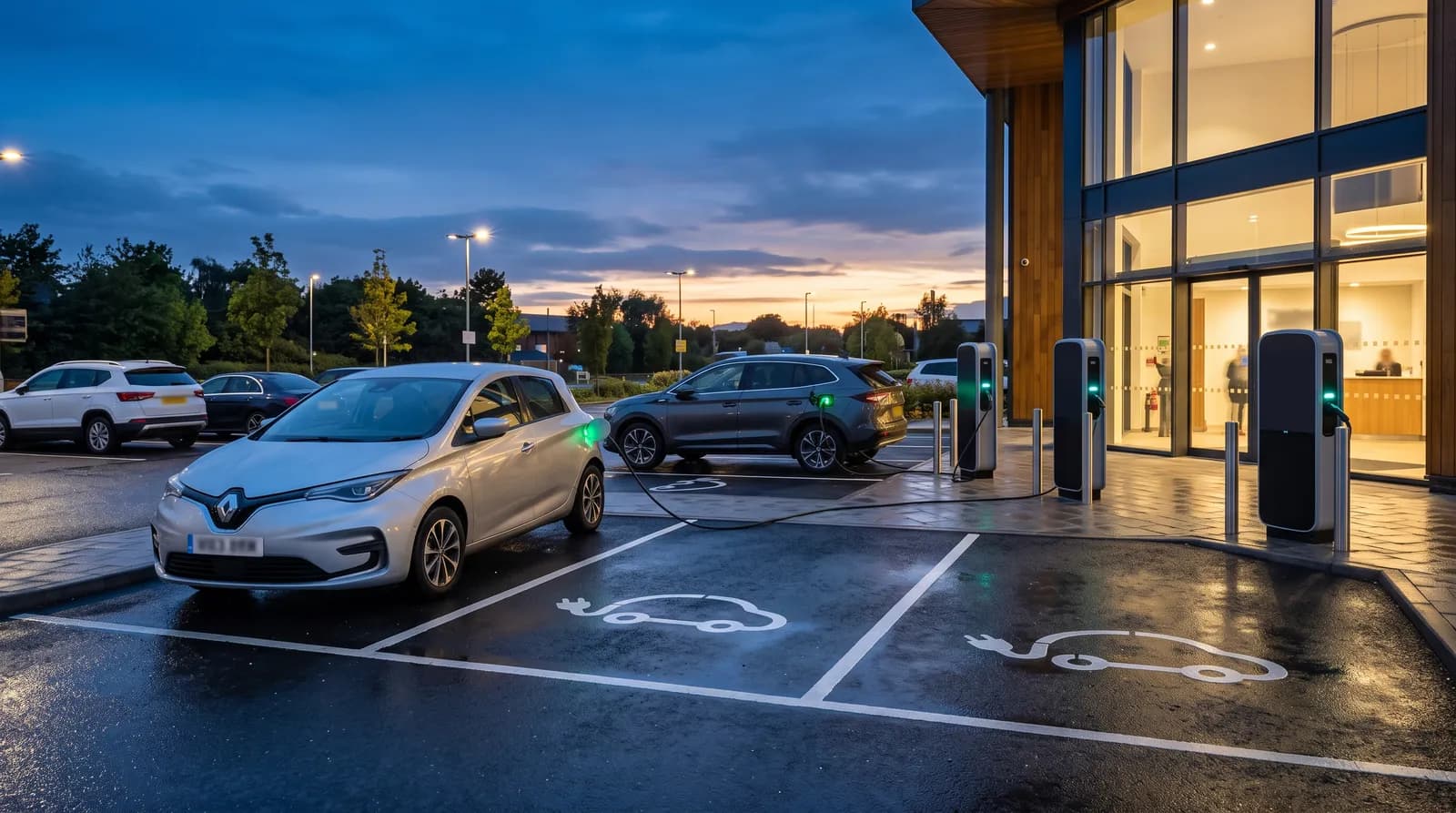
EV charger installation across north Derbyshire
Commercial sites across Chesterfield, the industrial estates towards the M1, and out into the Peak. Tell us the postcode and roughly how many bays you have in mind.
Do we cover your postcode?
Type the first part, like S40 or DE45. No need for the whole thing.
- Chesterfield
- Brampton, Hasland, Whittington Moor, Walton, Newbold, Old Whittington, Queen's Park, Chatsworth Road, the Crooked Spire, Ravenside
- Brimington
- Brimington Common, Chesterfield Road, Station Road, Tapton, Ringwood, Hollingwood, Staveley
- Dronfield
- Dronfield Woodhouse, Gosforth Lane, Coal Aston, Unstone, Holmesfield, the Civic Centre, Dronfield Bottom
- Clay Cross
- Danesmoor, Holmgate, North Wingfield, Egstow, Tupton, Pilsley, Stretton
- Bolsover
- Bolsover Castle, Shuttlewood, Whitwell, Hillstown, Carr Vale, Clowne, the M1 corridor
- Matlock
- Matlock Bath, Dale Road, Smedley Street, Hall Leys Park, Starkholmes, Darley Dale, Tansley
- Alfreton
- Somercotes, Riddings, Swanwick, Ironville, the A38, Alfreton Park, South Normanton
- Bakewell
- Rutland Square, Haddon Road, the Monsal Trail, Ashford in the Water, Over Haddon, Great Longstone, Youlgreave
- Buxton
- the Crescent, Pavilion Gardens, Fairfield, Harpur Hill, Burbage, Chapel-en-le-Frith, Tideswell, Whaley Bridge
- Glossop
- Old Glossop, Hadfield, Padfield, Norfolk Square, Simmondley, Charlesworth, the Snake Pass
- Derby
- Mickleover, Allestree, Oakwood, Chaddesden, Normanton, Peartree, Osmaston Road, Littleover
- Nottingham
- Forest Fields, Sneinton, West Bridgford, Beeston, Bulwell, Arnold, the Ring Road
- Ashover
- All Saints' church, Kelstedge, Littlemoor, Milltown, Overton, Uppertown, Fallgate, Alton, the Amber valley
- Holymoorside
- the Hipper valley, Loads Road, Walton, Somersall, Old Brampton, Cutthorpe, Wadshelf, Nether Loads
Who does the work
Qualified, insured and certified EV charger installers
Your job does not go to whoever answers first. Every installer working on our jobs clears the same six checks, and we verify them rather than take anyone's word for it. The bar is published in advance, and the evidence behind it comes with your quote so you can check it yourself.
Registered with a competent person scheme
We only send work to installers registered with a government-approved scheme such as NAPIT or NICEIC. That registration is what lets the work be certified and notified without you making a building control application.
TrustMark registered
We check for TrustMark, the government-endorsed standard for work in and around the home. It covers technical competence, trading practice and customer service, not just wiring.
Public liability insurance in date
We see the certificate before we send anyone a job, and you get a copy with your quote. A policy that has lapsed is a straight no, whatever else is in order.
Qualified, and experienced with EVs
City and Guilds qualified electricians working to BS 7671, with EV charging experience specifically. A charger circuit is not the place for someone learning on your house.
Workmanship guaranteed
We require a workmanship guarantee in writing from the installer, separate from and on top of the manufacturer warranty on the unit itself. You get the terms with the quote.
Publicly reviewed, and good
A public review record we can read is a condition of getting work from us: not testimonials on the installer's own site, but a profile you can check yourself. We send you the link with the quote.
Scheme registration numbers and insurance certificates come with your quote, so you can verify them yourself rather than taking a website's word for it. How we choose installers sets out all six checks, including what gets someone turned away.
Next step
Tell us the site postcode and how many bays you want.
We come back with what the supply will carry, what that means for the bay count, and where load management changes the answer.
Questions
Commercial EV charging questions
How many bays can we install without upgrading the supply?
More than most people expect. Load management shares the available capacity across the bays instead of giving every socket its full rating at once, so the limit is rarely the number of bays and usually the total draw. The answer comes out of the load assessment, which measures your existing peak instead of assuming it.
Do we need a three-phase supply?
Not necessarily. Three-phase is what makes 11kW and 22kW units worthwhile, but for vehicles parked all day a bank of 7kW bays on a well-managed single-phase supply often delivers more useful charging than a couple of fast bays. It depends on dwell time, not on headline ratings.
Can we charge staff or the public for using them?
Yes. Units with a back-office platform meter each session and bill by RFID card or app, with reporting per user or per department. We set that up as part of commissioning if you want it.
What does the paperwork look like?
Electrical installation certificate and test results for the new circuits, plus the network operator notification or application where the load requires it. For sites that need inspection and testing on record, we set the interval and provide the report each time.
How long does a commercial installation take?
The electrical work takes a day. What sets the timescale is the civils where cable has to cross parking, and the network operator where a supply change is needed. We tell you which of those applies at assessment, before you commit.
Do we need fast chargers for a van fleet?
Usually not. If vehicles sit for ten hours overnight, a bank of slower bays charges the whole fleet more reliably and more cheaply than a few fast ones with vehicles queueing for them. Fast charging earns its place where vehicles turn around mid-shift.
How do we avoid a large peak demand charge at a depot?
By spreading charging across the hours the vehicles are parked instead of starting everything at once. Smart charging schedules to your tariff and your first-out times, so vehicles are ready when the shift starts without the site setting a new peak.
Get a quote
Ask about workplace or customer charging
Site postcode, rough bay count and what the parking is used for. We reply with what the supply will carry.
- No cost, and no obligation to book anything
- Your details are never sold on or passed around
- A fixed price for the work described, in writing
Would rather talk it through? Call 01246 952042.
Other services
Other EV charging services we cover
Domestic charger installation
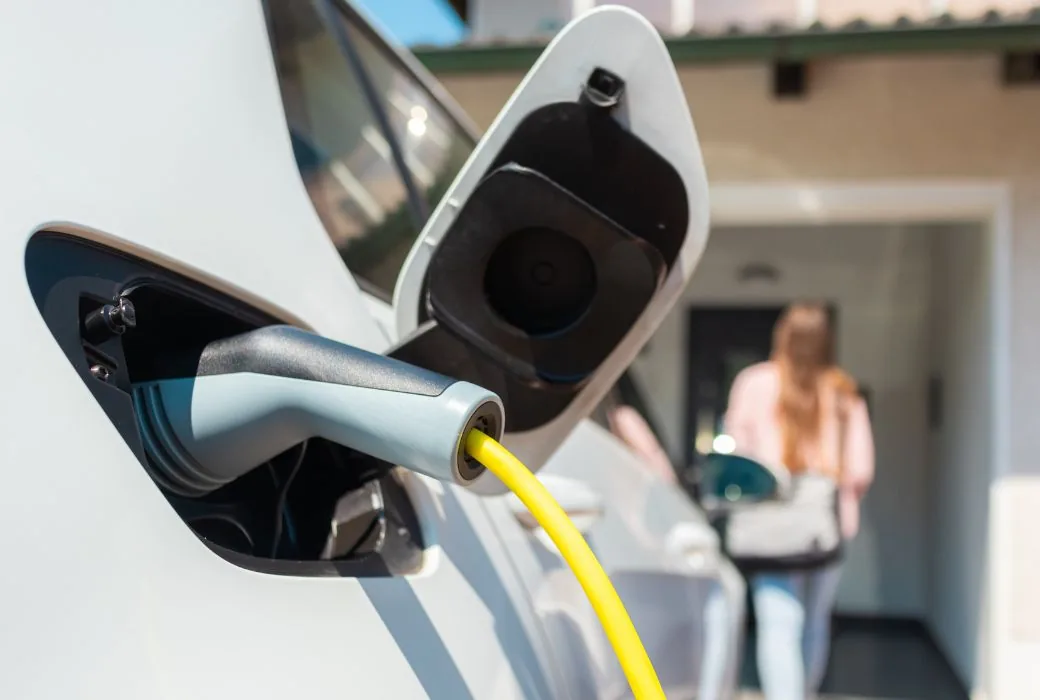
An electric car charging point fitted at home, from the supply check through to the certificate and test results.
Read moreRepairs, servicing and upgrades
Fault finding on charging points we did not fit, tripping circuits, failed units, periodic inspection and testing, and replacing or moving an older unit.
Read more